Butte's housing stock is old and its winters are long. We sweep, inspect and clear the things that catch fire when nobody looks at them.
Give us the basics and we'll come back with a firm price, usually the same day.
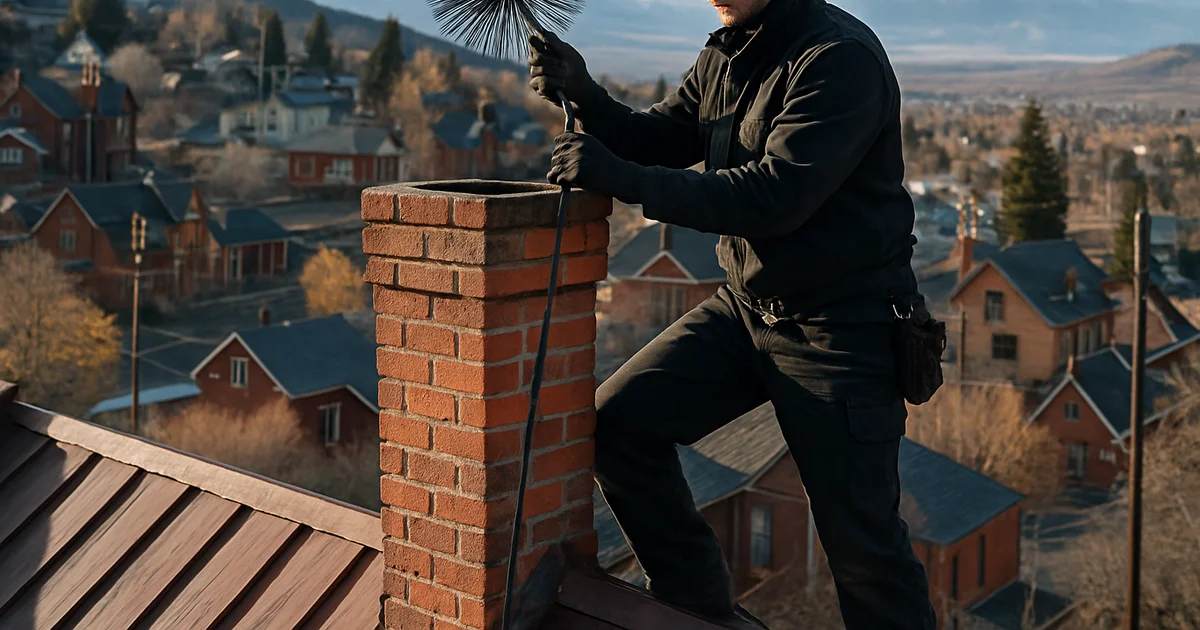
Three jobs that share one truck and one set of brushes - and all three get put off until something goes wrong.
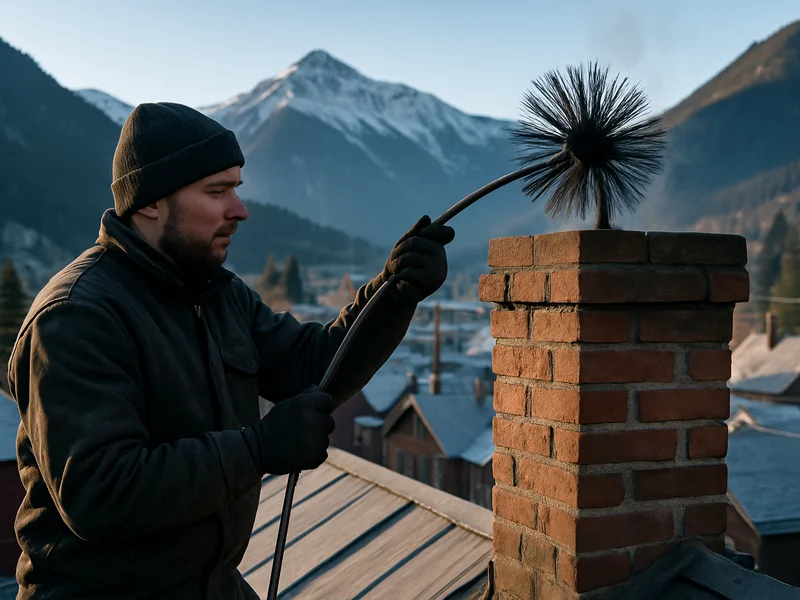
Creosote removal, firebox and smoke shelf cleaning, and a Level 1 inspection of the flue, crown and cap on every single visit. No upsell attached to the inspection.
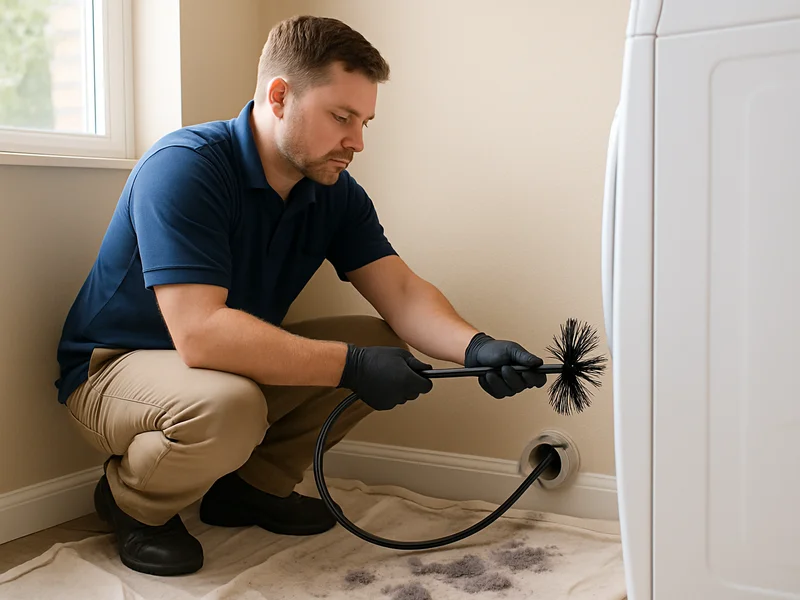
Rotary brushing of the whole duct run, not just the three feet you can reach by pulling the dryer out. Airflow measured before and after so the result is a number, not an opinion.
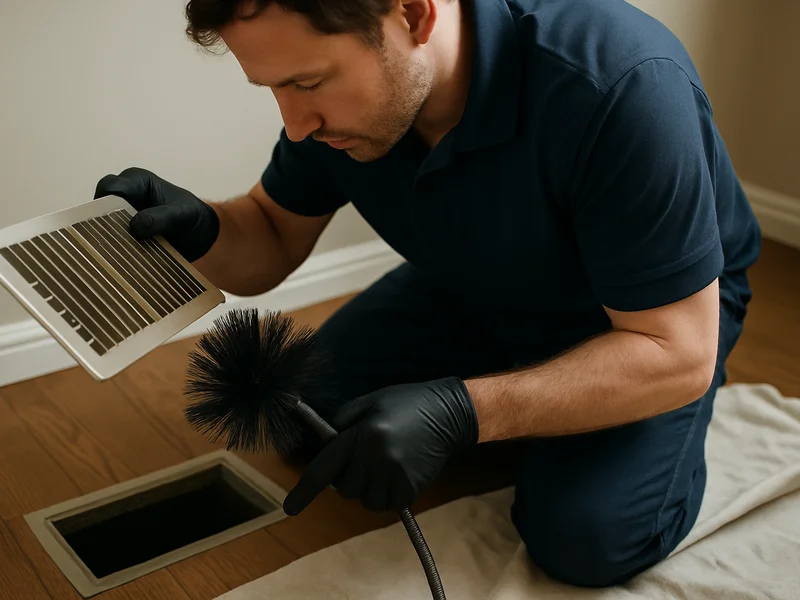
Supply and return trunk lines cleaned under negative pressure, with every register lifted and brushed. Worth doing after a remodel, a purchase or a smoke event - and often not worth doing otherwise.
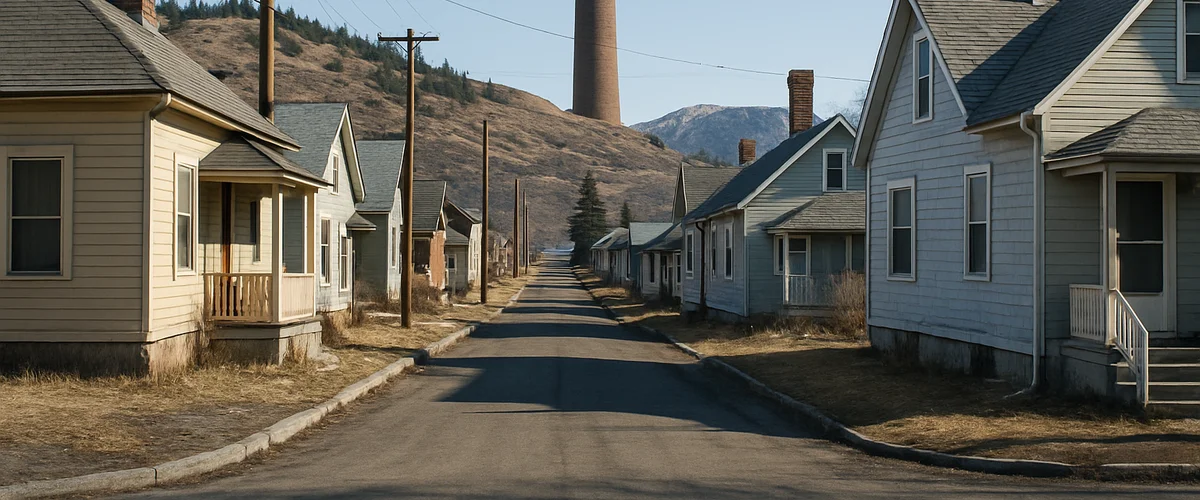
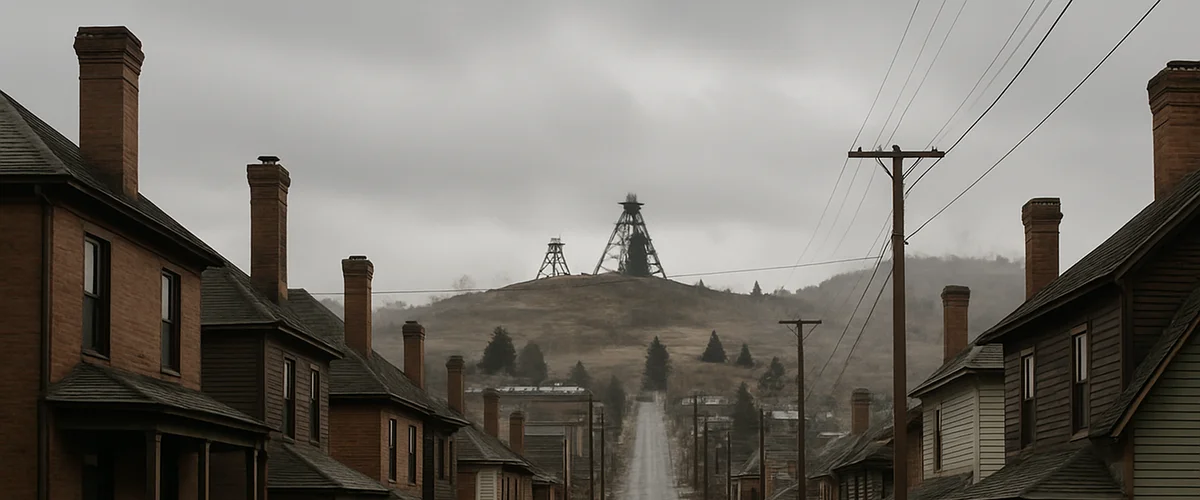
Butte was built fast, built to last, and most of what got built is still standing. Uptown blocks are dense with houses that went up between 1890 and 1920, back when a masonry chimney was simply how a building breathed - one flue for the furnace, a second for a parlour stove, occasionally a third that nobody has opened in fifty years. Those flues were sized and lined for coal and cordwood. A good number of them are now asked to vent a modern gas appliance instead, which is a different job with different condensation behaviour, and the mismatch is invisible until mortar starts failing from the inside out.
Then there is the altitude and the length of the heating season. At just over a mile above sea level, draft behaves differently than it does at the elevations most stove manuals quietly assume. A marginal flue that would keep itself reasonably clear in warmer, denser air instead accumulates creosote through a heating season that runs from October into May. The result is a housing stock where the distance between homes swept every year and homes never swept at all is unusually wide, and where the second group tends to find out about it with smoke in the living room.
Anaconda and Deer Lodge have their own versions of the same story. Anaconda's housing went up around the smelter on a similar timeline with similar masonry, and sits in a valley that traps cold air and holds it. Deer Lodge is more spread out and more rural, which shifts the mix toward wood stoves and metal flue pipe rather than brick - a cheaper system to maintain, but one that fails faster when it is ignored, because thin-wall pipe has no thermal mass to forgive a bad burn. We run all three towns on regular routes and price them the same.
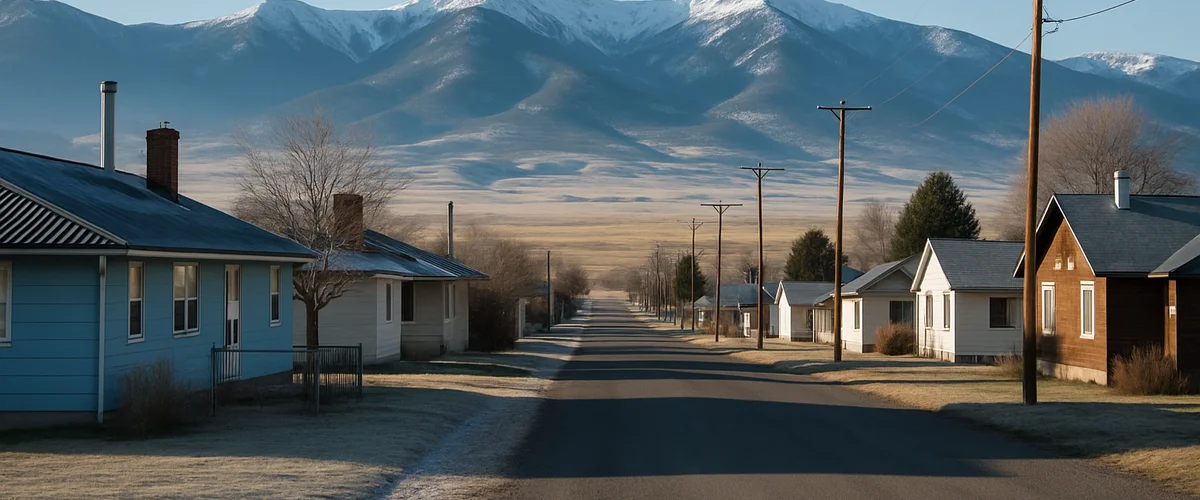
Three towns along the I-90 and I-15 corridor, all inside an easy service radius.
We quote the job before starting and that is the number on the invoice. Nothing gets discovered halfway through that quietly doubles it.
If a flue is clean, it is clean, and we say so. Selling a sweep that isn't due is how this trade earned the reputation it has.
Drop cloths, sealed access at the firebox and a HEPA vacuum running the whole time. Soot on your carpet is not an accident, it is a sign somebody skipped a step.
Photographs of the flue, crown and cap, plus a written note on anything worth watching next year. Useful at insurance renewal and useful at closing.
NFPA 211 calls for an inspection at least once a year, with cleaning done as the inspection dictates. In practice a wood stove burning through a Butte winter usually earns an annual sweep; an open fireplace lit a dozen evenings a year often does not. We inspect first and tell you which one you have rather than selling the sweep either way.
Most single-flue sweeps with a Level 1 inspection run $180 to $280, depending on access and how much creosote has built up. Houses with two or three flues, or where the only way in is off a steep roof, cost more. You get the number before we start, not after.
All three, on regular routes. Anaconda is about 25 miles west on MT-1 and Deer Lodge about 40 miles north on I-90, and neither carries a travel surcharge.
Yes, and combining them is the cheapest way to buy both. Same visit, same truck, no second trip charge. Vent and duct work is also what keeps us busy in the months when nobody is thinking about their fireplace.
It does, and this is the single most common thing people get wrong here. A flue built for coal or cordwood is oversized for a gas appliance, so exhaust cools on the way up and condenses inside the masonry. That moisture attacks mortar joints and liners from within. It is a different failure mode than creosote, and it is quieter until it isn't.
September and October fill up first. Call or send the form and we'll tell you honestly what's open.